
Hi, Hidden Movie Club members! It’s Derek! 🤘🏼
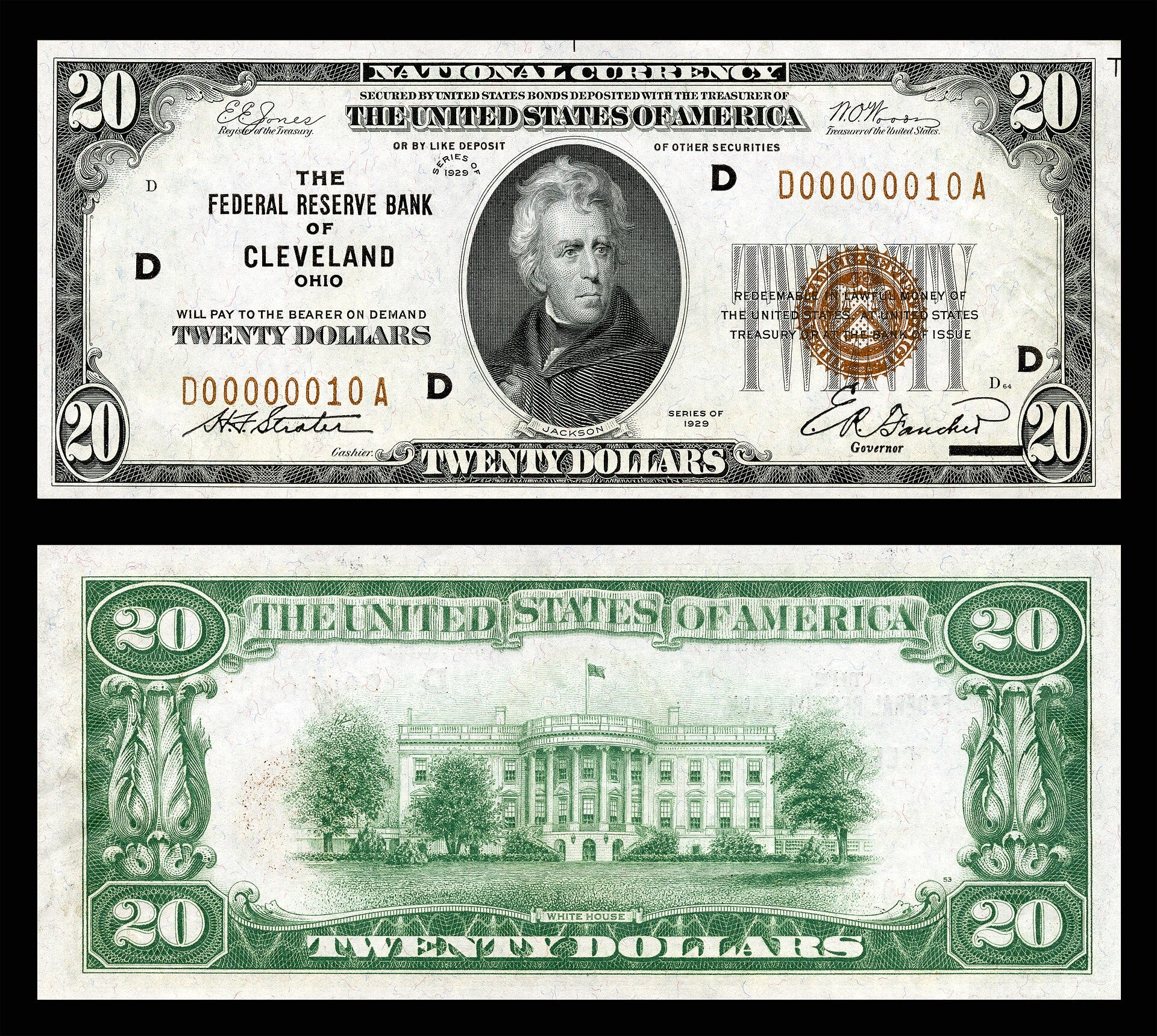
People are always surprised when they learn that something that they thought was always one way turns out to be more recent. The examples that come to mind initially, for me anyways, is when people find out that the United States’ Pledge of Allegiance didn’t always include the phrase “One nation, under God, indivisible…” and that paper bills didn’t always include “In God We Trust” on them. In both of these cases, the truth is that those things were added/changed in the 1950’s, long after they were originally created. The originals were simply “One nation, indivisible…” and “E Pluribus Unum”. For most people, though, their entire experience with both of these things is the changed version.
I recently learned something similar about movies!
This past week I was playing through Red Dead Redemption 2, an absolute modern masterpiece of storytelling, filled with detail, thoughtfulness, and care. At a certain point in the game (no spoilers!), you visit a city where the player can participate in all kinds of side activities that take all kinds of forms – playing poker in a saloon, joining a game of dominoes near the rail yard, sitting down for a variety show of various exotic performers, and even sitting down to catch a movie. In the game, you can walk up to the ticket counter, buy a ticket, and walk right into the theatre and sit down and see an entire short film that was created just for the game by a series of writers, artists, and animators. It’s actually a pretty impressive level of detail for something that a lot of players simply won’t engage with or even try. The movie is even era-appropriate in its weirdness as far as the themes and messaging goes but, at least in the game, once you buy a ticket, you can sit in the theatre and watch the film on loop over and over again with a few minutes in between each loop.
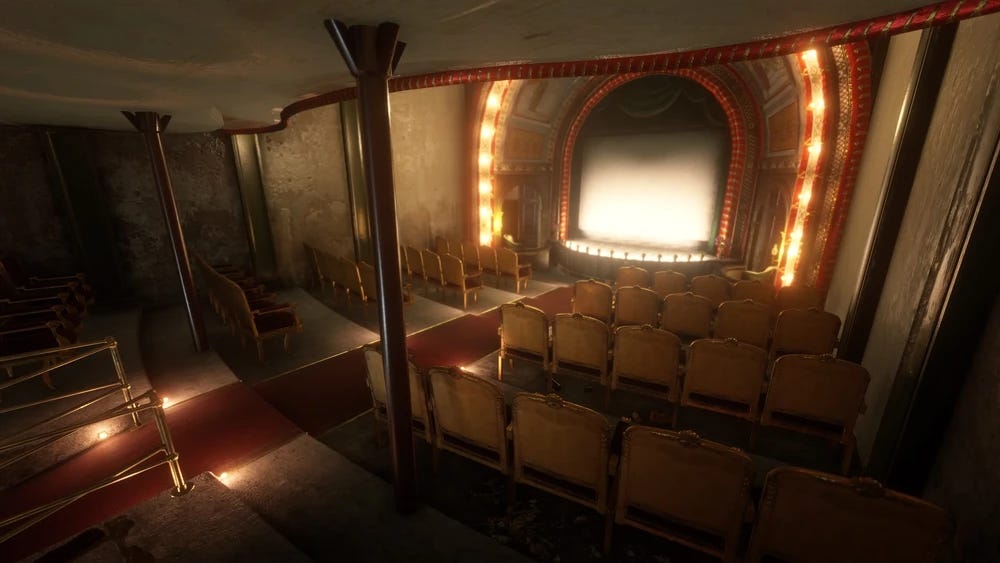
This got me thinking about what the movie-going experience was like at that time in real life and, to my surprise, the game pretty much stuck to reality for its microcosm of theatre life. As I researched what movie theatres were like in the past, the most surprising thing I learned was that, just like in the game, showtimes were not a normal part of the movie theatre experience! Movies didn’t have scheduled showtimes. If you bought a movie ticket and walked into the screening, you’d very often walk into the middle of a film and you’d basically wait until the movie finished, at which point there would be a break filled with short secondary films (the origin of the term “B-Movie”), and then the primary screening would start up again. They would just loop for the entirety of the theatre’s open hours.
So when did showtimes become a thing? Oddly enough, Alfred Hitchcock’s Psycho was the first film ever to mandate the starting showtimes in US theatres! It wasn’t the first film to ever do this – that distinction belongs to Les Diaboliques in France – but the practice was unheard of in the United States. It’s not really clear if the forced showtimes were planned from the start of the film’s production, but, in hindsight, it seems like an obvious decision. The film was heavily marketed as starring Janet Leigh, a huge draw for moviegoers of the time, and Hitchcock, rightfully, felt that paying customers might feel cheated if they arrived to the screening late and never saw her in the film because (Spoiler Alert! for a 60+ year old movie) she dies in the very beginning in one of the most iconic scenes ever put to film. He required theatres to not only start the film at specific intervals throughout the day but to display a message and/or poster near the marquee that informed moviegoers of the unique screening requirement.
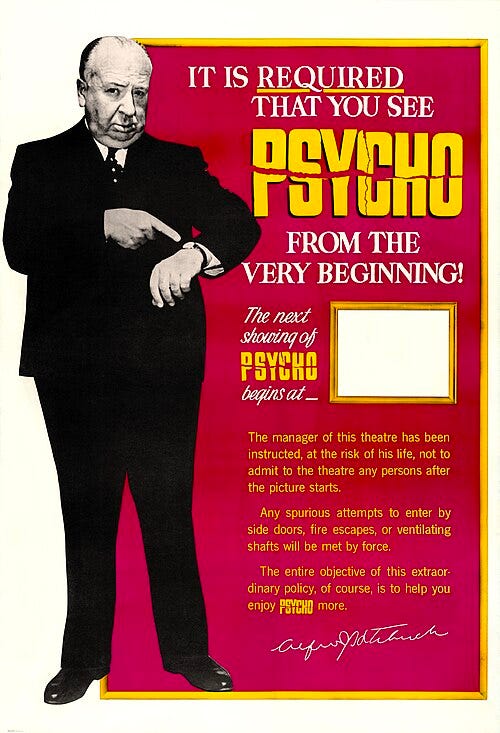
Initially, theatre owners were upset about the new policy as a requirement by Hitchcock. They weren’t happy with making theatregoers wait as most of their venues were never set up to accommodate people doing anything other than going directly into the auditorium. On top of that, they assumed that customers would be upset being made to wait knowing there were empty seats in the auditoriums. Within the first 2 days, lines were forming outside of the theatres and owners were faced with what seemed like the untenable choice of refusing to screen the latest film of one of the most prolific directors of the time or, in their minds, losing money as their customers were repelled by the sight of bored patrons waiting.